Voices from the Field is a podcast from the National Collaborating Centre for Indigenous Health (NCCIH), one of six National Collaborating Centres for public health in Canada. The NCCIH supports a renewed public health system in Canada that is inclusive and respectful of First Nations, Inuit, and Métis peoples. Through a holistic, coordinated, and strengths-based approach, it connects evidence, knowledge, practice, and policy. The podcast advances self-determination and Indigenous knowledge in support of optimal health and well-being.
Episodes
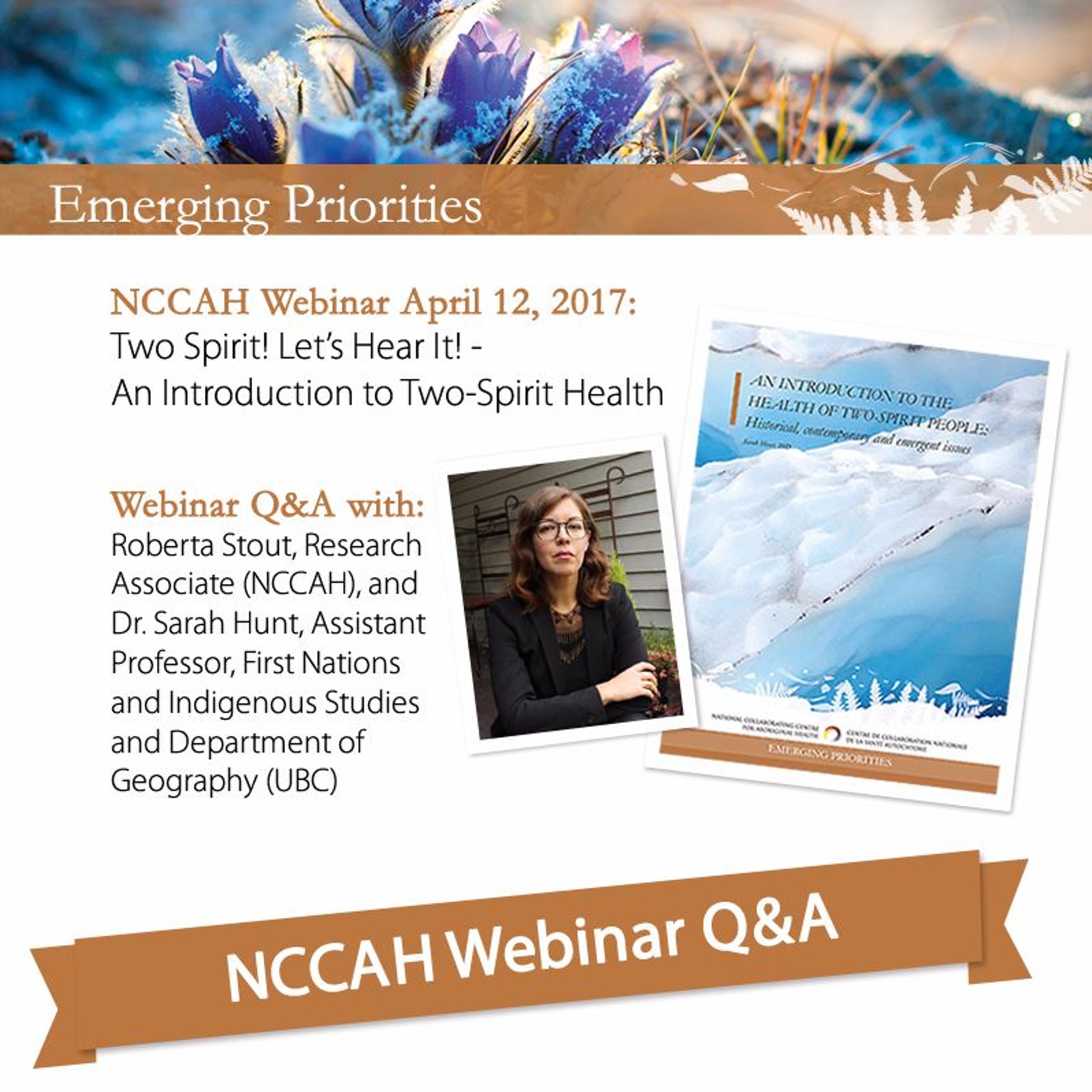
NCCIH Webinar Two Spirit! Let’s Hear It! Q&A with Dr. Sarah Hunt
Le français suit l'anglais.
NCCIH Webinar - Two Spirit! Let’s Hear It! Q&A with Dr. Sarah Hunt
In this audio recording of the NCCIH Webinar “Two Spirit! Let’s Hear It! - An Introduction to Two-Spirit Health” (held April 12, 2017), Roberta Stout (Research Associate, NCCIH) discusses questions submitted by the webinar attendees with the presenter Dr. Sarah Hunt.
Watch on YouTube: https://youtu.be
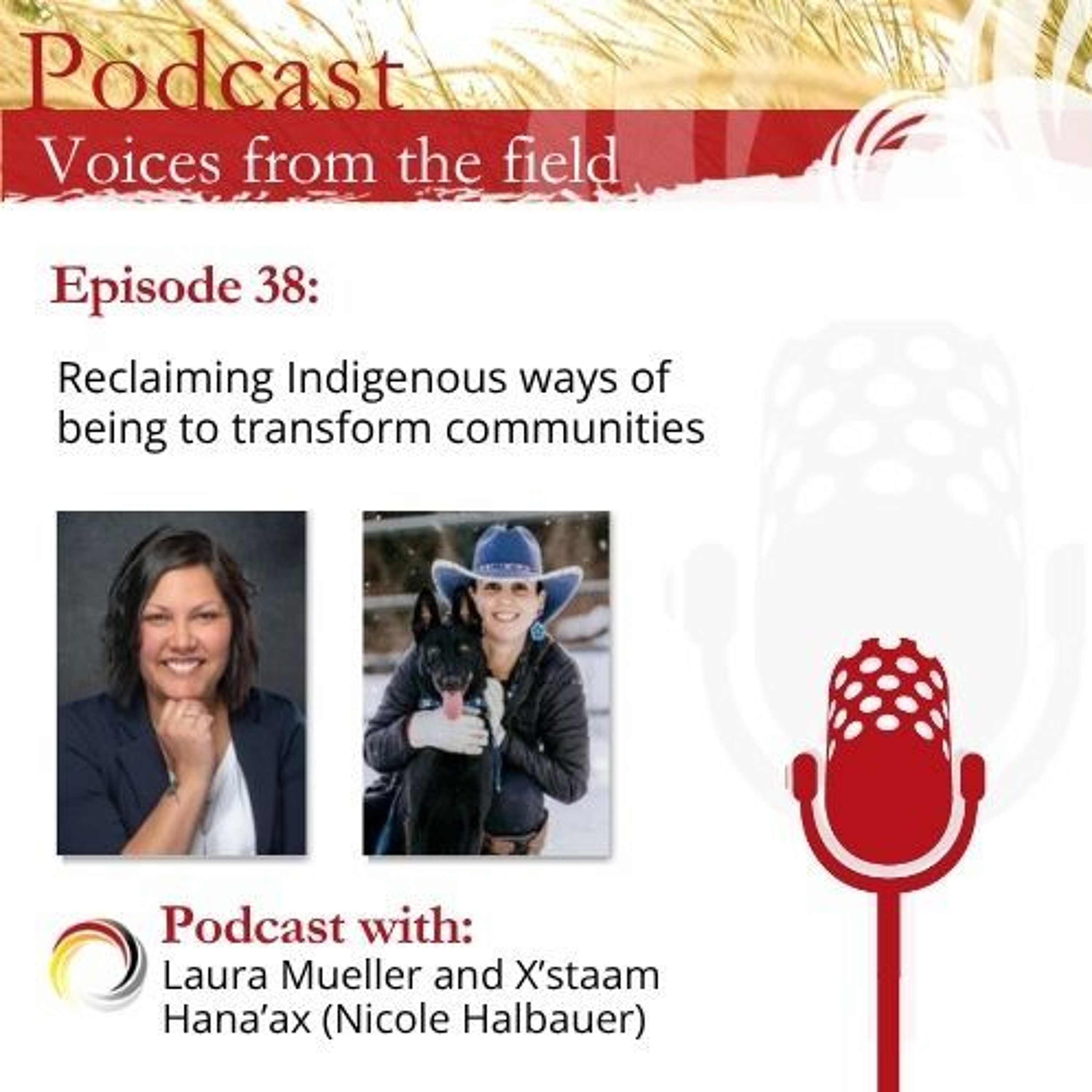
Voices from the field 38 – Reclaiming Indigenous ways of being to transform communities
(Le français suit l'anglais)
In this podcast, Laura Mueller and X'staam Hana'ax (Nicole Halbauer), two First Nations PhD candidates, researchers, and mothers, have a conversation about their efforts to decolonize community governance structures and academia. They talk about their roles as mentors, leaders, and advocates to foster environments that can support Indigenous student success and buil
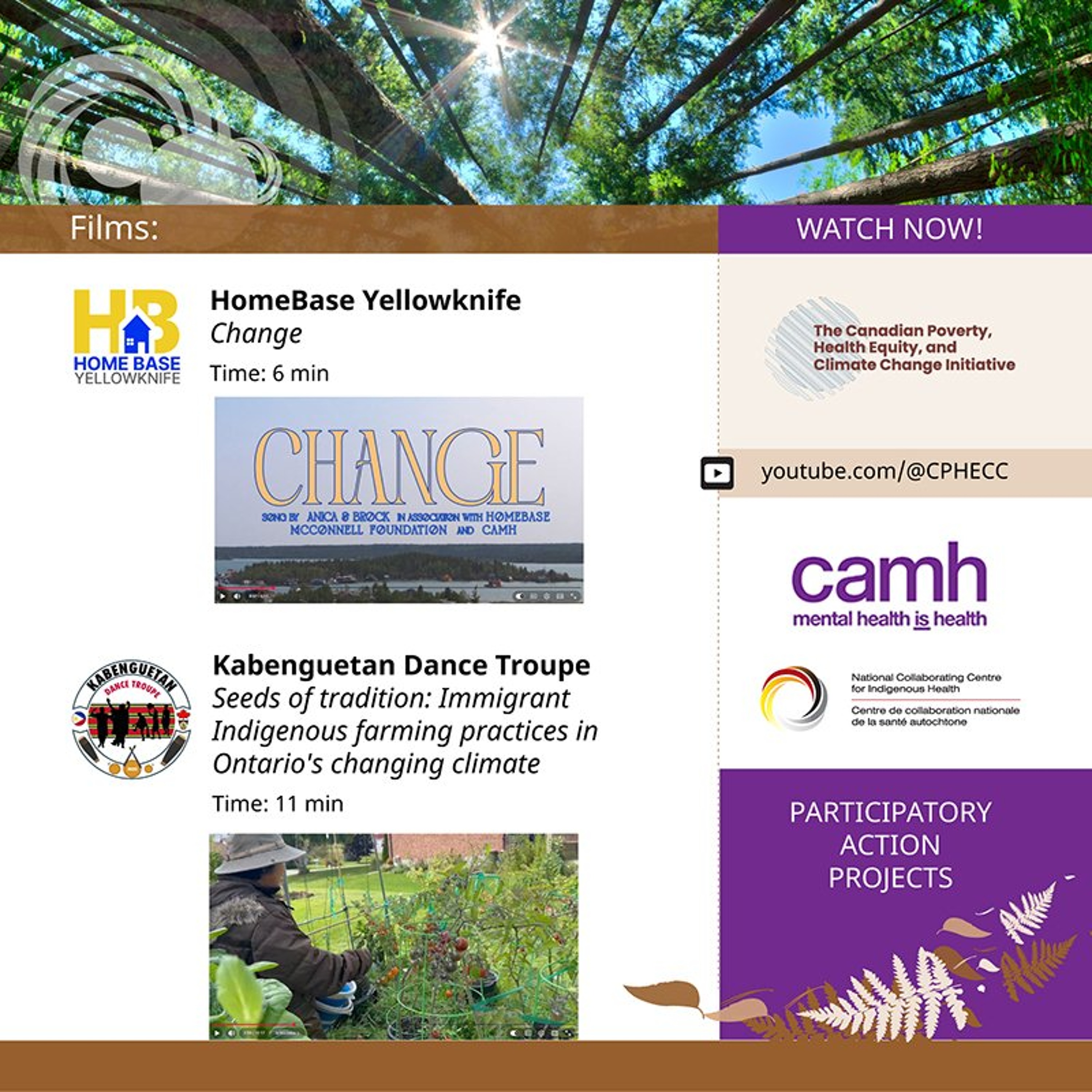
CAMH & NCCIH - Considering impacts of & responses to climate change through participatory filmmaking
(Le français suit l'anglais)
CAMH and NCCIH film screening (webinar) - Considering impacts of and responses to climate change through participatory filmmaking
This audio recording of the film screening “Considering impacts of and responses to climate change through participatory filmmaking: Youth perspectives from Yellowknife and the experiences of the Philippines Indigenous diaspora in Toron
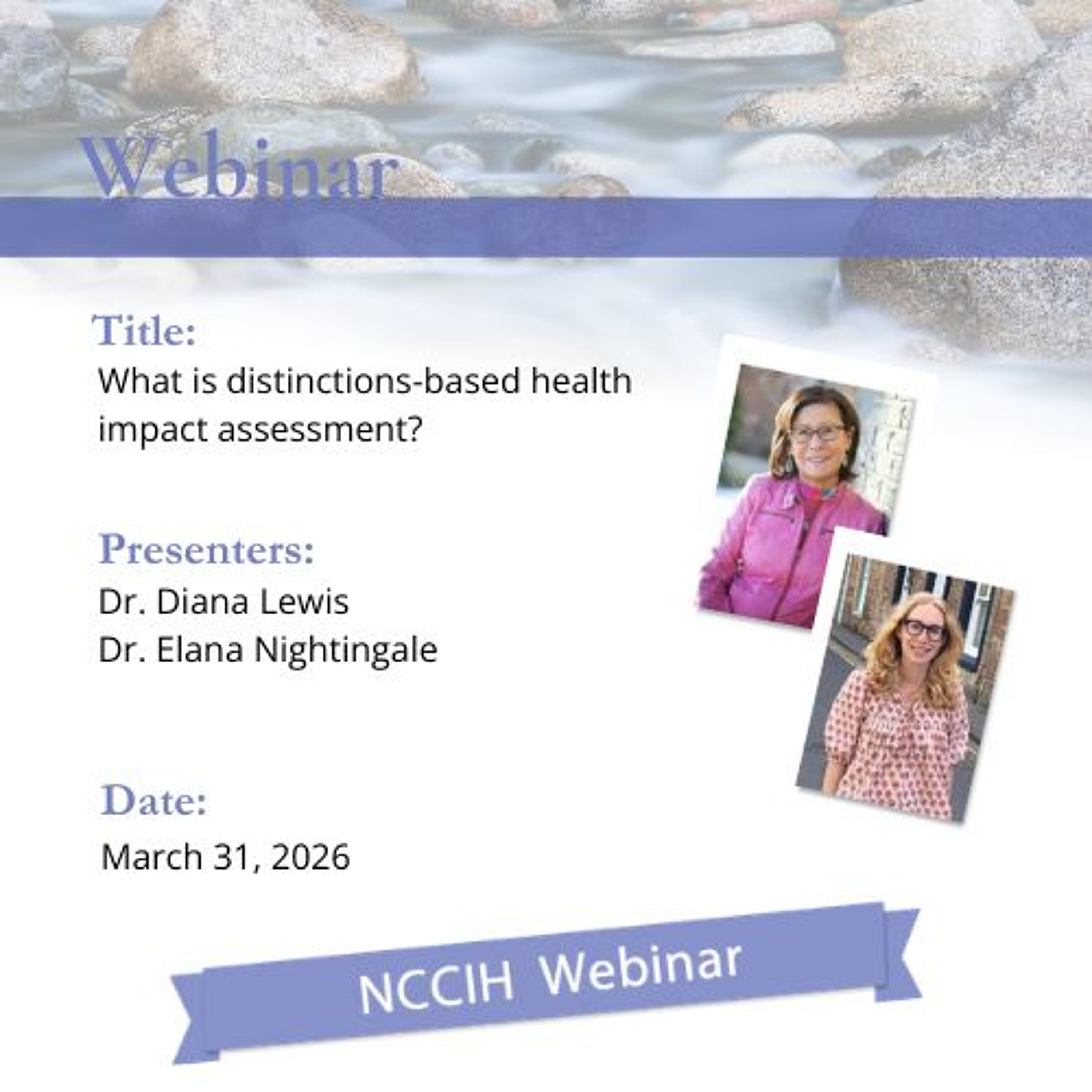
NCCIH Webinar - What is distinctions-based health impact assessment?
(Le français suit l'anglais)
Health impact assessment (HIA) provides a systematic process to identify and analyze the potential effects of a proposed development project on the health and well-being of a population. For Indigenous Peoples in Canada, standardized HIAs are not able to adequately measure potential health impacts as these processes do not consider the full range of cultural, social
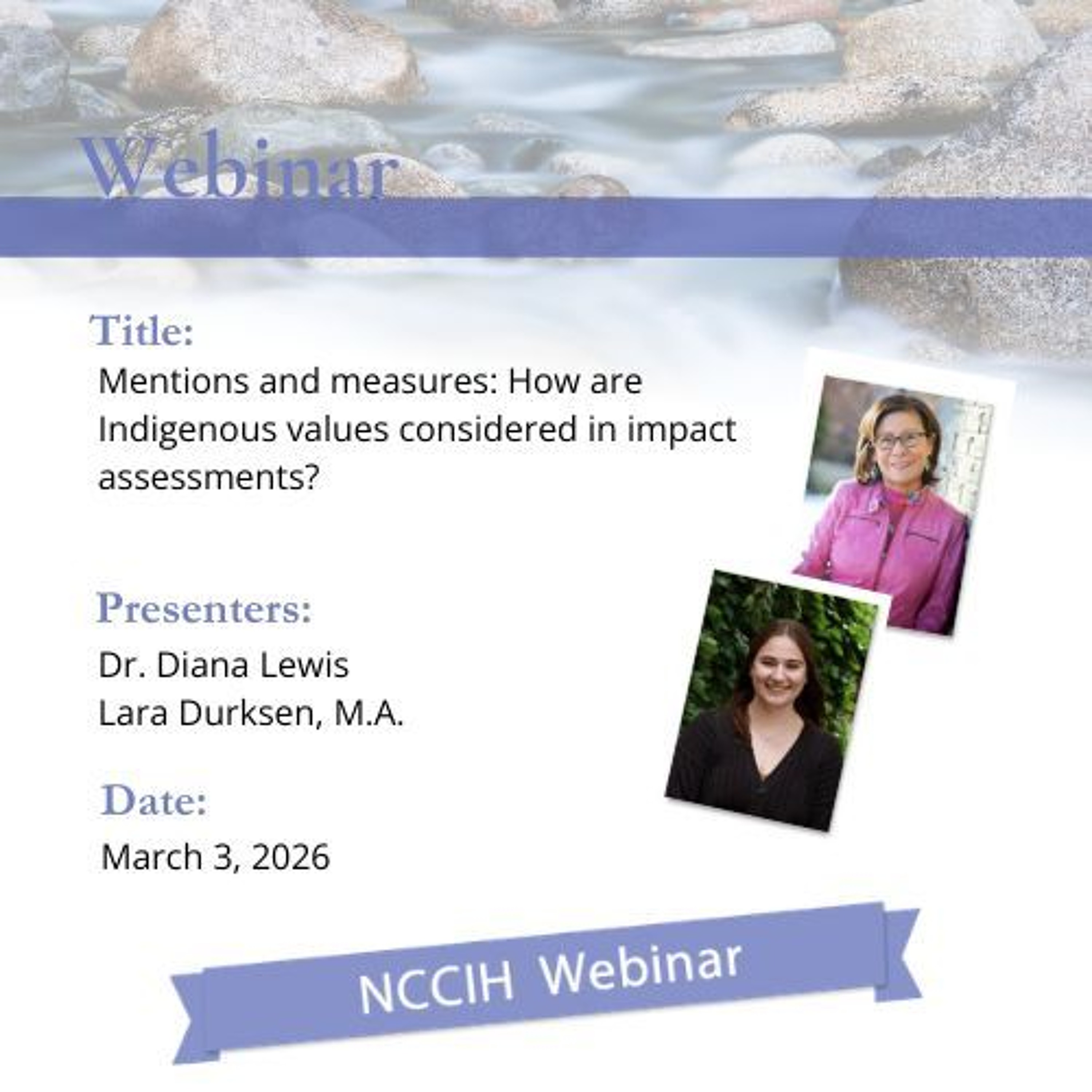
NCCIH Webinar - Mentions and measures: How are Indigenous values considered in impact assessments?
(Le français suit l'anglais)
In Canada’s oil and gas industry, impact assessments (IAs) are used to determine the positive and negative externalities of proposed projects. These assessments tend to prioritize economic gains over the values of Indigenous communities who bear the weight of impacts. In this recording of the NCCIH Webinar "Mentions and measures: How are Indigenous values considered
NCCIH Webinar – Indigenous-specific health impact assessment: What might it look like in Canada?
(Le français suit l'anglais)
NCCIH Webinar – Indigenous-specific health impact assessment: What might it look like in Canada?
This video recording of the NCCIH Webinar "Indigenous-specific health impact assessment: What might it look like in Canada?" will explore what distinctions-based Indigenous-specific health impact assessment (HIA) could look like in Canada, advancing Indigenous Peoples’
NCCIH Webinar - H.E.A.L. Healthcare: Hearts-based education and anticolonial learning in healthcare
(Le français suit l'anglais)
NCCIH Webinar – H.E.A.L. Healthcare: Hearts-based Education and Anticolonial Learning in Healthcare
This audio recording of the NCCIH Webinar "H.E.A.L. Healthcare: Hearts-based Education and Anticolonial Learning in Healthcare" engages participants in anti-bias training using anticolonial arts-based learning tools available from the H.E.A.L. Healthcare website –
NCCIH Webinar - What does meaningful engagement mean
(Le français suit l'anglais)
Despite several approaches to Indigenous participation and engagement proposed by the federal government, Indigenous communities are demanding that the development of distinctions-based and culturally relevant Indigenous specific HIA require a stand-alone Indigenous specific HIA process informed by guidance, expectations, and standards established by Indigenous comm
Hearing the stories of our health - Bailey Quaw
Le français suit l'anglais.
Hearing the stories of our health: Perspectives of First Nations, Inuit and Métis youth - Bailey Quaw
The NCCIH undertook a national digital storytelling project, "Hearing the stories of our health: Perspectives of First Nations, Inuit, and Métis youth" to better understand what health and well-being mean to Indigenous young people. Nine of the digital storytellers
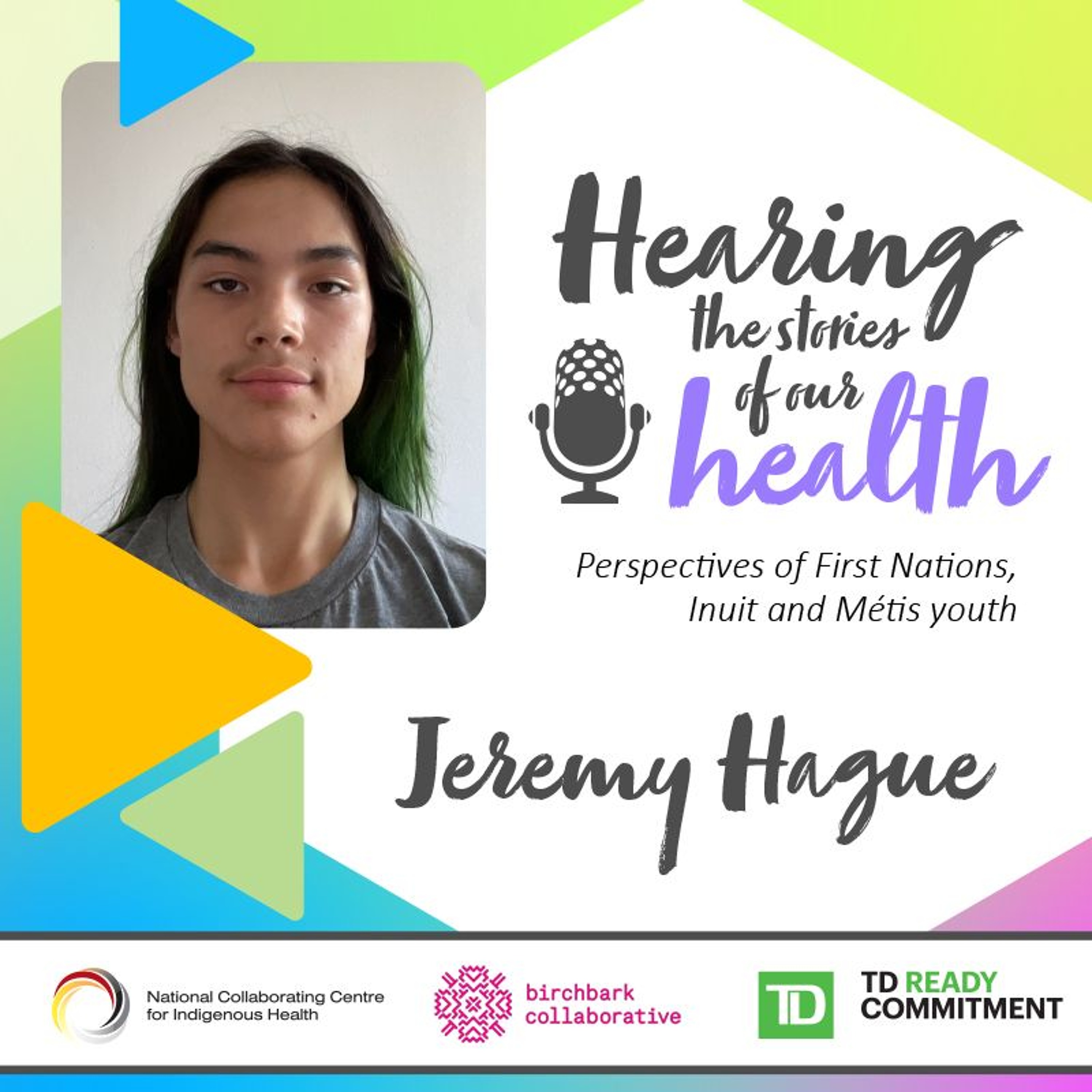
Hearing the stories of our health - Jeremy Hague
Le français suit l'anglais.
Hearing the stories of our health: Perspectives of First Nations, Inuit and Métis youth - Jeremy Hague
The NCCIH undertook a national digital storytelling project, "Hearing the stories of our health: Perspectives of First Nations, Inuit, and Métis youth" to better understand what health and well-being mean to Indigenous young people. Nine of the digital storytellers
Hearing the stories of our health - Halil Ibrahim Napatchie Noah Sundu
Le français suit l'anglais.
Hearing the stories of our health: Perspectives of First Nations, Inuit and Métis youth - Halil Ibrahim Napatchie Noah Sundu
The NCCIH undertook a national digital storytelling project, "Hearing the stories of our health: Perspectives of First Nations, Inuit, and Métis youth" to better understand what health and well-being mean to Indigenous young people. Nine of th
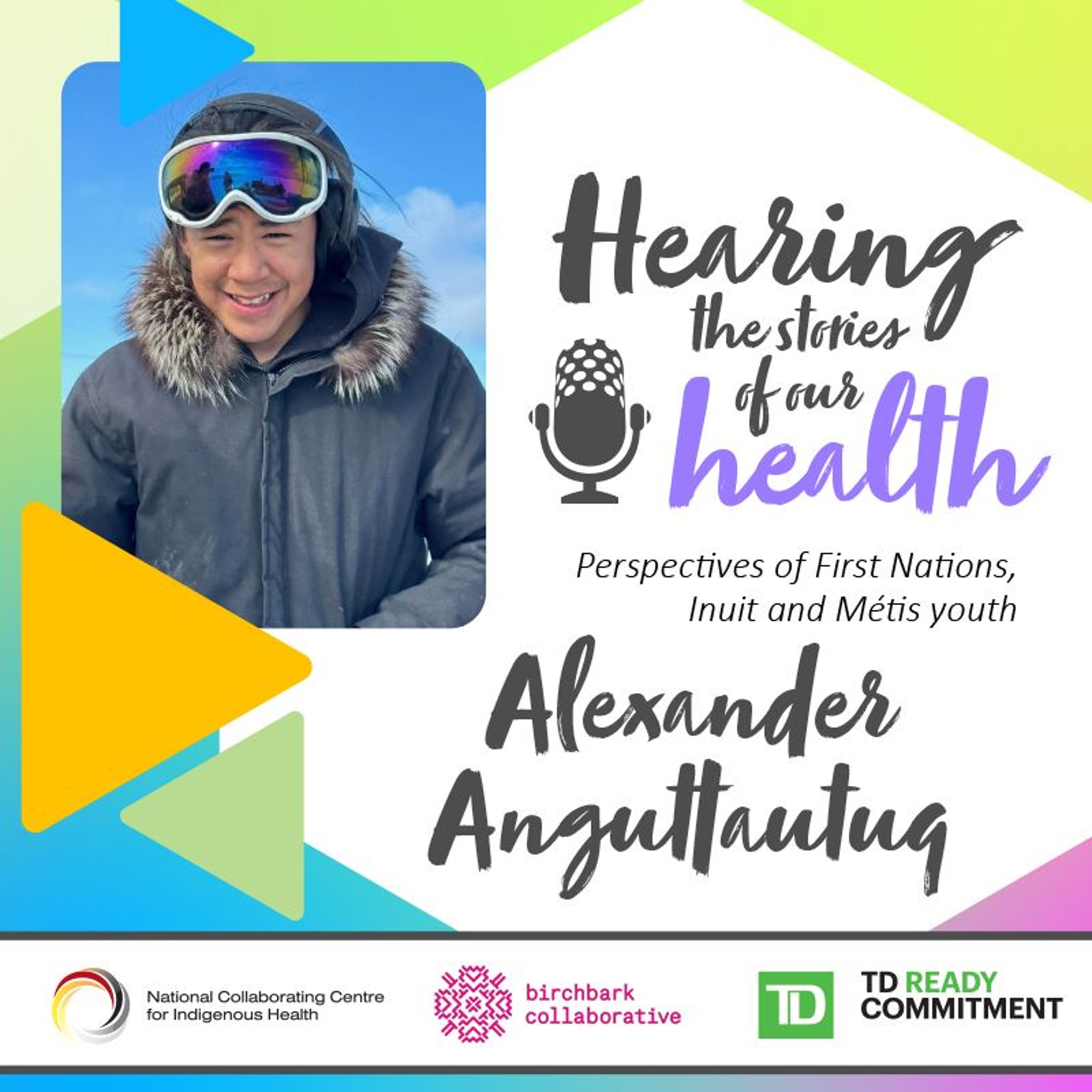
Hearing the stories of our health - Alexander Anguttautuq
Le français suit l'anglais.
Hearing the stories of our health: Perspectives of First Nations, Inuit and Métis youth - Alexander Anguttautuq
The NCCIH undertook a national digital storytelling project, "Hearing the stories of our health: Perspectives of First Nations, Inuit, and Métis youth" to better understand what health and well-being mean to Indigenous young people. Nine of the digital sto